
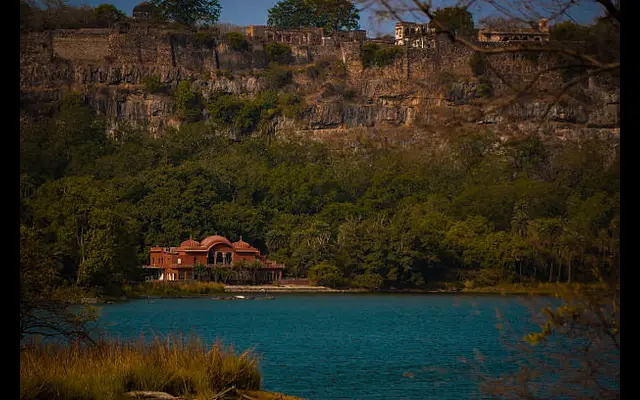
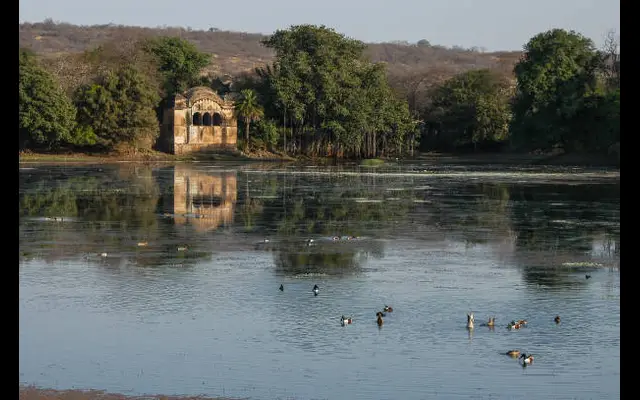
The land around the fort has hills, open grasslands and dense dry deciduous forests. It is at the meeting point of the Aravalli and Vindhya ranges.
This gives it an naturally fortified setting. There are water bodies like Padam Talao and Rajbagh Talao below the fort.
They support the ecosystem and make the place look beautiful.The vegetation has dhok, neem and banyan trees. These trees are well-suited to the -arid climate.
The Ranthambore Forts unique geography supports wildlife.
It makes the fort a perfect blend of beauty and historical strength.In times the fort was founded around the 10th century by the Chauhan dynasty.
Its location on a rocky hill made it a naturally secure stronghold. This helped it become a center of regional power.
The medieval period was the forts dynamic phase. It flourished under Raja Hammir Dev Chauhans rule. He is remembered for his courage and leadership.
A major event occurred in 1301 when Alauddin Khalji launched a siege and took control of the Ranthambore Fort. After this it passed through the hands of rulers including the Delhi Sultanate, the Mughals and later the Jaipur kingdom.
In times the fort transitioned from a military base to a heritage landmark. It is now a protected monument and a popular tourist destination within Ranthambore National Park.
Its recognition as a UNESCO World Heritage Site has secured its place as a symbol of Indias rich history.
The Ranthambore Fort is uniquely set within Ranthambore National Park. Here history meets wildlife.
The fort is surrounded by forests, lakes and grasslands. It lies in a tiger habitat, home to the majestic Bengal Tiger.
Visitors may also see leopards, deer, langurs and various bird species near the Ranthambore Fort.
Nearby lakes like Padam Talao attract birds and crocodiles. This rare setting creates an experience where ancient architecture and thriving wildlife exist together.
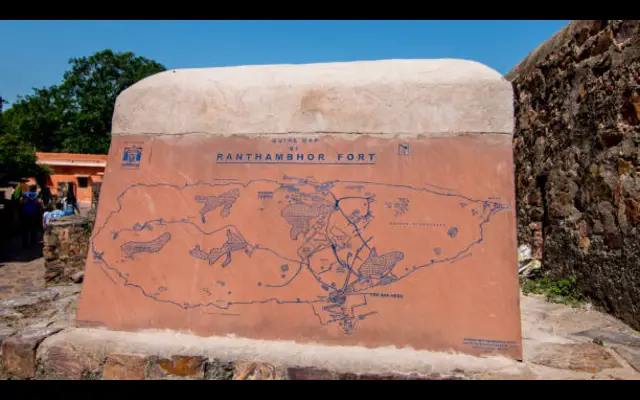
The Ranthambore Fort is both a treasure and a wildlife paradise.The Ranthambore Fort is not one monument but a vast complex with many historic sites. Each site has its story and significance.
As you explore the Ranthambore Fort you come across important destinations that reflect its rich past.
One of the famous places inside the Ranthambore Fort is the Trinetra Ganesh Temple. It is a centuries- temple dedicated to Lord Ganesha. People believe that this temple has been continuously worshipped since times. Thousands of devotees visit it every year to seek Lord Ganeshas blessings.
Another key structure is Hammir Mahal.
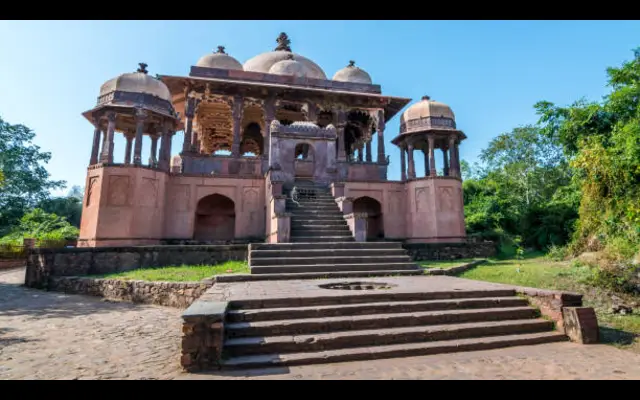
It is associated with Raja Hammir Dev Chauhan, who ruled the Ranthambore Fort during its powerful period. The palace stands as a reminder of his bravery and royal lifestyle. Nearby Badal Mahal offers views and reflects the architectural elegance of the Rajput era.
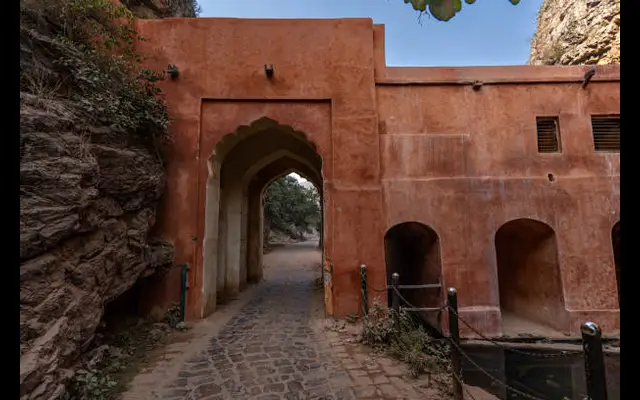
The Ranthambore Fort also includes stepwells, gates and watchtowers. These were once used for defense and water storage.
Jogi Mahal, located at the base near the Ranthambore Fort adds to the charm with its scenic importance.
Each destination within the Ranthambore Fort tells a story of devotion, warfare and royal life. This makes the Ranthambore Fort a complete historical experience, than just a single structure.